
A professional new start at over 50 was long considered taboo, or at least an extremely risky endeavor in the Swiss job market. But times are changing rapidly. Due to the ongoing shortage of skilled labor, changing demographics, and profound structural shifts across many industries, more and more Swiss companies are recognizing the valuable potential of experienced professionals who want to reorient themselves. Today, a career change at 50+ is not only possible, but often an enormous enrichment – both for one's own quality of life and for future employers.
So why take the risk? The reasons for changing industries or professions later in life are manifold: health aspects, the desire for greater purpose, insurmountable structural crises in the old professional field, or simply the longing to learn something entirely new once again. This article highlights the biggest challenges, shows battle-tested strategies, and encourages you to actively and confidently tackle the "New Start 50+" project.
Challenges: The Reality in the Swiss Job Market
Despite the shortage of skilled workers, they still exist: reservations and invisible hurdles in the minds of some recruiters. Age-specific stereotypes, such as an alleged lack of flexibility, lower digital literacy, or inflated salary expectations, often come into play when reviewing application dossiers. Anyone changing industries over the age of 50 often competes with younger, newly trained talents who possess the most up-to-date theoretical knowledge and are perceived as more malleable.
However, the biggest hurdle is often one's own mental barrier. "Am I not too old for this?", "Who would still want me?", "Can I still keep up with the younger generation?" – these doubts are understandable, but they are the biggest obstacle to a successful career change. It is essential to shed these limiting beliefs and focus on the strengths you have built up over decades.
Widgets.Ue50CvModernizerAudit.title
Widgets.Ue50CvModernizerAudit.subtitle
Widgets.Ue50CvModernizerAudit.resultTitle
Widgets.Ue50CvModernizerAudit.low
Widgets.Ue50CvModernizerAudit.ctaTitle
Widgets.Ue50CvModernizerAudit.ctaDesc
Strategies for a Successful Career Change
The key to success does not lie in a gapless biography, but in the art of persuasive argumentation and strategic positioning.
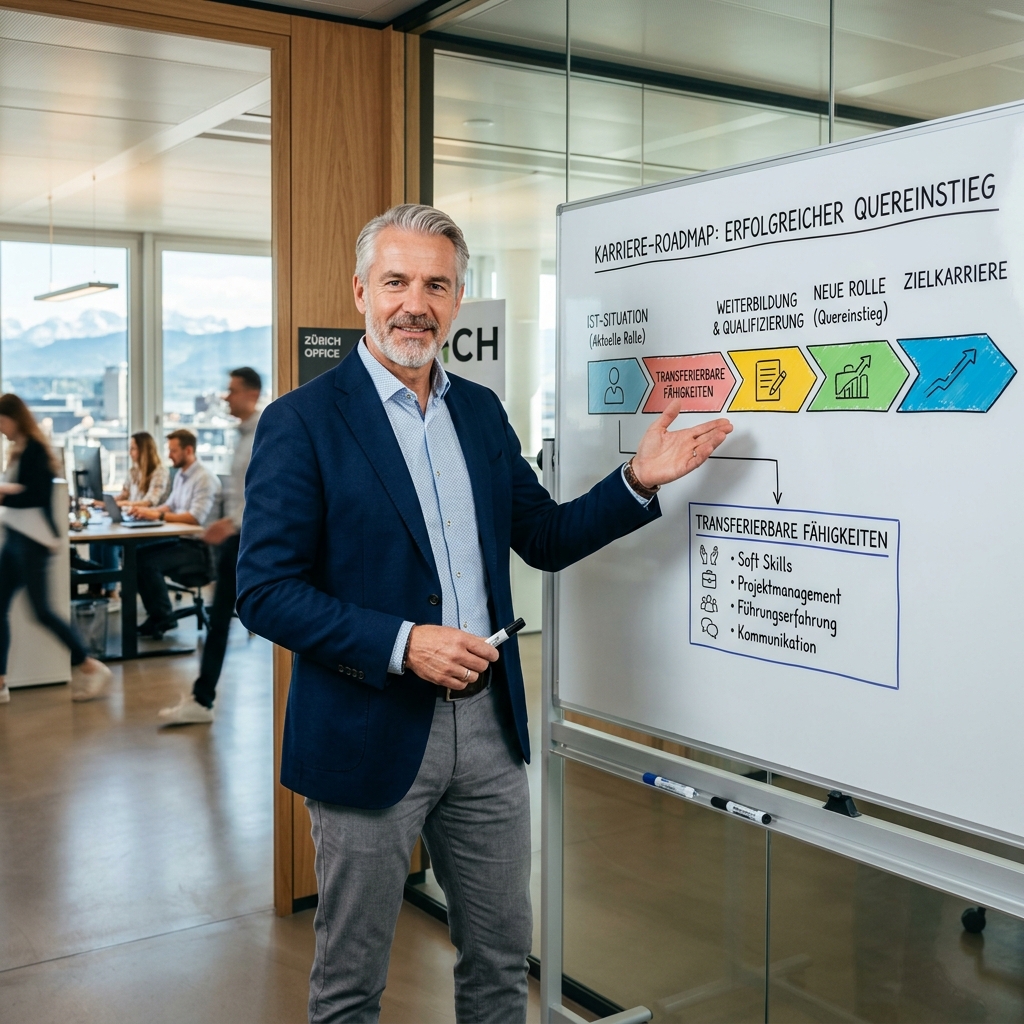
1. Put Transferable Skills Front and Center
Your greatest strength as an experienced professional is not necessarily the specific technical expertise from your previous industry, but your transferable skills. These are abilities that are valuable in almost any job: leadership experience, project management, conflict resolution skills, customer orientation, resilience, or analytical thinking.
Tip: Analyze your previous career carefully. Which core competencies have you developed that precisely match the requirements of your new target job? Structure your CV and cover letter right around these transferable skills. Show concrete examples from your past where these abilities led to success.
2. Targeted Further Training and Upskilling
A career change often requires closing formal or technical gaps. It doesn't always have to be a multi-year degree program. Targeted, compact training courses (e.g., certificate courses, bootcamps, industry-specific intensive courses) not only show future employers that you possess the necessary basic knowledge, but also that you are eager to learn, proactive, and highly motivated. Especially in the areas of digitalization, IT, or new technologies, a current certificate can work wonders and immediately refute the prejudice of "lacking digital skills."
3. Activate Your Own Network
The hidden job market is traditionally strong in Switzerland. For career changers 50+, networking is often the decisive door opener. Make use of contacts from previous jobs, associations, or alumni organizations. Speak openly about your intention to make a change. Opportunities often arise precisely where someone already knows and values your personality and work ethic – then formal qualifications often take a back seat.
4. Optimize the CV for Career Changers
A chronological CV that simply lists 30 years in the "wrong" industry is of little help for a career change. Instead, use a skills-based or functional approach in your CV.
Start with a strong short profile (summary) that condenses your motivation for the switch and your most important competencies relevant to the new role. After that, do not just structure strictly by employers, but highlight projects, achievements, and skill areas that are important for the target position.
How PARAT Supports Your Fresh Start
At PARAT, we understand that a CV for a career changer has completely different requirements than that of a professional advancing linearly in their industry. Our CV Wizard not only offers modern Swiss standard templates, but also helps you bring structure to your diverse experience.
You can specifically highlight skill areas and thus optimally present your transferable skills. With the AI cover letter generator trained on Swiss German, you can also effortlessly draft a cover letter that doesn't sound like an "act of desperation," but like a conscious, value-adding decision for the new company. Discover here how PARAT takes your application to the next level.
KI-Prompt Check für deine Branche
Wähle deinen (zukünftigen) Bereich aus und sieh dir an, wie du ChatGPT als Quereinsteiger konkret nutzen kannst:
"Erstelle eine Zusammenfassung dieses 10-seitigen Protokolls. Fokussiere dich nur auf die Action-Items, die Abteilung HR betreffen, und liste sie als Bullet-Points auf."
Warum das funktioniert: Im KV-Bereich geht es um Informationsverdichtung. Nutze KI, um aus langen E-Mail-Verläufen oder PDFs sofort das Wichtigste herauszufiltern.
Conclusion: Reaching New Goals with Experience and Courage
A career change at 50+ is undoubtedly a marathon, not a sprint. It requires perseverance, tolerance for frustration, and a clear strategy. However, companies in Switzerland are beginning to rethink. The value of life experience, soft skills, and inner calm during turbulent times is increasingly recognized. If you can communicate your motivation clearly and skillfully transfer your existing skills to the new requirements, the chances for an exciting new professional chapter are better than ever.